
Fresh details have emerged about Nigeria’s confirmed case of Ebola virus disease, with health officials identifying the infection as the Bundibugyo strain, for which no licensed vaccine or approved specific treatment is currently available.
The Nigeria Centre for Disease Control and Prevention (NCDC) confirmed the strain following laboratory testing, while the World Health Organisation (WHO) has also reported the absence of an approved vaccine specifically for Bundibugyo virus disease. Research into potential vaccines and treatments is ongoing. citeturn156523search0turn156523search1turn156523search3
The patient, identified by officials as a woman and a diplomat, reportedly arrived in Nigeria from Uganda on October 3, 2026. Her nationality has not been disclosed, and investigations are continuing to determine where she contracted the virus.
NCDC Confirms Bundibugyo Strain
Olajumoke Babatunde, the NCDC’s Director of Public Health Laboratory Services, disclosed the laboratory findings during an emergency meeting of health officials in Abuja on Wednesday, October 21.
“We did three levels of tests, but all molecular. The strain was Bundibugyo,” Babatunde said.
The confirmation came after the Federal Government announced the Ebola case in the Federal Capital Territory (FCT) on October 20.
According to the WHO, the patient developed symptoms on October 7, four days after arriving in Nigeria, and sought medical attention at a private health facility in Abuja on October 11. Laboratory testing subsequently confirmed the infection on October 20. She was placed in isolation and is receiving medical care. citeturn156523search0
Patient Reportedly Develops Multi-Organ Failure
During Wednesday’s emergency meeting, an official disclosed that the patient’s condition had deteriorated significantly, resulting in multi-organ failure.
“This person is actually a diplomat,” the official said, without revealing her nationality.
Multi-organ failure is a serious medical complication involving the failure of multiple organs to function adequately. Authorities have not publicly provided further clinical details about the patient’s condition.
Despite the absence of a licensed vaccine or approved specific treatment for the Bundibugyo strain, supportive medical care remains important. The WHO says early supportive care can improve a patient’s chances of survival. citeturn156523search15
Authorities Trace 44 Contacts
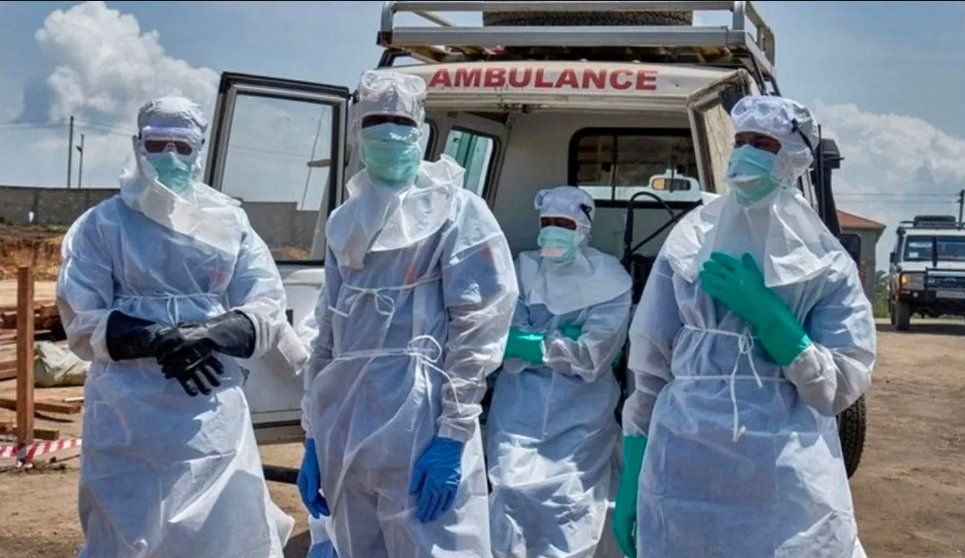
The Federal Ministry of Health and Social Welfare, the NCDC and the FCT Health Services Secretariat have launched a coordinated response to limit the risk of further transmission.
Health authorities have identified 44 close contacts linked to the patient. Those being monitored reportedly include healthcare workers, other patients, caregivers and individuals connected to her travel history.
Contact tracing involves identifying people who may have been exposed to an infected person and monitoring them for symptoms during the relevant period.
The Federal Government has also intensified surveillance and preparedness measures at healthcare facilities and points of entry, including international airports.
Coordinating Minister of Health and Social Welfare Professor Muhammad Ali Pate said Nigeria was collaborating with Uganda while implementing containment measures.
“All I can tell you is that we are collaborating with our sister African nation of Uganda. What is important is that we have found this one case. We are doing contact tracing, and we are putting containment measures to ensure that it doesn’t go into our population,” Pate said.
Uganda Says Source of Infection Remains Unclear
The patient’s travel history has drawn attention to Uganda, where she reportedly transited before arriving in Nigeria. However, transit through a country does not by itself establish where an infection was acquired.
According to the account provided by Uganda’s Ministry of Health, preliminary information indicated that the woman had travelled to eastern Democratic Republic of the Congo (DRC) for business before passing through Uganda in early October.
Ugandan health officials said she reportedly showed no symptoms while in the country and developed symptoms after arriving in Nigeria.
“The location of exposure remains under investigation,” the statement said.
Uganda also requested detailed travel and clinical information from Nigeria to help establish the circumstances of the case and determine whether additional contact-tracing measures were needed.
The investigation is therefore focused on reconstructing the woman’s travel and exposure history. Nigerian authorities have not established publicly where she contracted the virus.
Government Strengthens Ebola Preparedness
Nigeria’s response has attracted attention from the National Assembly, with lawmakers reportedly urging the Federal Government to release funds to relevant agencies to support containment efforts.
The Senate also called for screening measures at international airports and other points of entry.
These measures come amid a wider regional outbreak of Bundibugyo virus disease. The WHO has reported outbreaks involving the strain in the Democratic Republic of the Congo and Uganda, while other countries have detected imported cases.
Nigeria previously experienced an Ebola outbreak in 2014 after an infected traveller arrived in Lagos from Liberia. That outbreak was contained.
How Ebola Spreads and What the Public Should Know
Ebola can spread through direct contact with the blood or other bodily fluids of an infected person who has developed symptoms, as well as through contaminated objects and materials.
Symptoms can include fever, severe weakness, headache, muscle pain and sore throat. Other symptoms may include vomiting and diarrhoea. The incubation period is generally between two and 21 days.
People do not typically transmit Ebola before symptoms begin. Anyone who believes they may have had direct exposure to a confirmed case should contact public health authorities promptly and follow official instructions rather than attempting to manage a suspected infection alone.
The public should rely on updates from the NCDC, the Federal Ministry of Health and the WHO, and avoid spreading unverified claims about the patient’s identity or the origin of the infection.
Investigation Continues
Nigeria’s immediate priority is to provide medical care to the patient, identify and monitor contacts, and prevent further transmission.
Although the absence of a licensed vaccine or approved specific treatment for Bundibugyo virus disease presents a significant challenge, laboratory confirmation, isolation, contact tracing, infection prevention and supportive care remain essential parts of the response.
Investigations into the patient’s travel history and possible exposure are ongoing. Until health authorities establish the source of infection, the circumstances surrounding her travel through Uganda should not be treated as proof that the virus was acquired there.
ERIBS Media will continue to follow verified updates from Nigerian health authorities and the WHO as the investigation develops.
No Approved Vaccine for Ebola’s Bundibugyo Strain as Nigeria Investigates Case
More News



0 comment
Leave a comment